
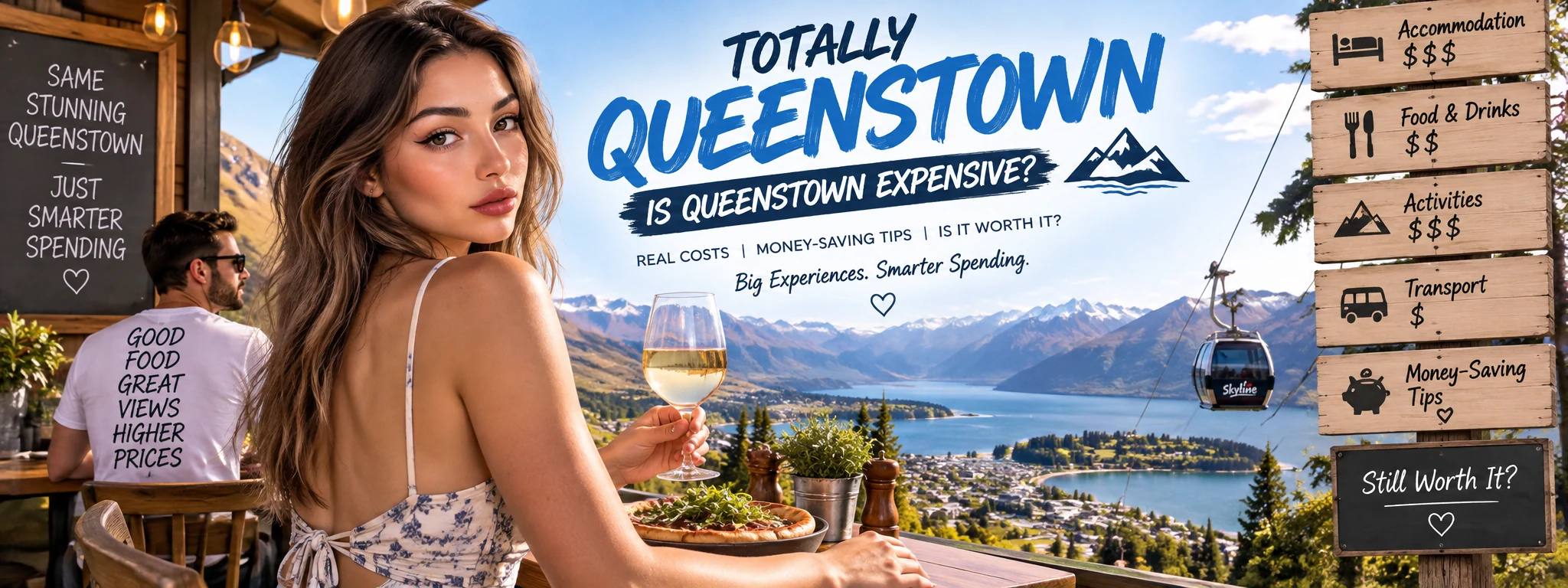
Queenstown can be expensive, but it is not expensive in the same way every hour. The budget usually bends under peak-date accommodation, several premium activities and convenience spending. Walking the lakefront, exploring Queenstown Gardens or enjoying Arrowtown costs little or nothing. A good plan protects the one or two paid experiences that matter and removes waste elsewhere.
Current transport reality (checked 4 October 2026): an adult Queenstown Orbus trip is NZ$2.50 with a Bee Card. Cash is NZ$4 on ordinary buses and NZ$10 on the airport bus; bank cards cannot be used to pay on buses. Council-managed central parking reaches NZ$6.50 an hour in several high-demand streets, while some outer council areas are cheaper. Those two facts make a central, bus-connected stay much more competitive than its room rate alone suggests.
Build the budget in the right order
- Lock the dates: school holidays, ski weeks, summer peaks and major events can change room and flight availability.
- Choose the base: a cheaper distant room may create rental-car, fuel and parking costs.
- Select signature activities: price the final checkout total, including photos, transfers and equipment.
- Add food and local transport: decide which meals are occasions and which are simply fuel.
- Keep a contingency: weather changes can produce extra transport, food or rebooking costs.
Accommodation is the first big lever
The cheapest nightly rate is not always the cheapest stay. A central room can remove daily parking and transfer costs; a Frankton apartment may make self-catering easier; a shared hostel kitchen can reduce food spend; an outer resort can be good value only when its transport and facilities suit the itinerary. Compare the whole-stay cost: room, breakfast, parking, resort fees if any, cancellation terms and how you will get home after dinner.
For fixed peak dates, book refundable accommodation early and review it before the cancellation deadline. For flexible travellers, shoulder periods can offer better availability, but “shoulder season” is not a promise of perfect weather or bargain pricing around events.
Compare three totals, not three room rates
Put each serious accommodation option into one of three columns: sleeping cost, daily movement cost and food flexibility. A central hostel or hotel may win because the lakefront, restaurants and activity pickups are walkable. Frankton can win when the room has a kitchen, a supermarket is close and the bus route fits. A remote lodge can still be the right indulgence, but its transfers and the cost of an unplanned taxi belong in the comparison.
Also check whether the quoted total includes parking, breakfast and card surcharges, and whether cancellation becomes non-refundable before the weather forecast is useful. Queenstown's expensive mistakes are often hidden in terms and logistics rather than the headline nightly rate.
Paid activities: choose memories, not a pile of receipts
Bungy, skydiving, jet boating, scenic flights and guided excursions are premium products. Pick the experiences that are genuinely distinctive to your group rather than buying three versions of speed, height or scenery. Check what the advertised price excludes: transfers, photos, equipment, food, card fees and optional insurance can change the comparison.
Bundles can save money when every component is already wanted. They are poor value when the discount persuades you to add a filler activity. Read cancellation and weather policies before paying; a cheap non-refundable rate can become expensive if the itinerary has no space to reschedule.
Use a one-big-ticket-per-day rule
One premium booking with a generous time buffer is usually better value than two rushed bookings that compete for the same daylight and weather window. Keep the second half of the day flexible with a walk, the Gardens, the waterfront or Arrowtown. If the first activity moves because of wind or cloud, the itinerary still works and you are less likely to lose a second booking.
Free and low-cost Queenstown is not second-rate
- Walk the lakefront and Queenstown Gardens.
- Use easy sections of the Queenstown Trail suited to your group.
- Explore Arrowtown's historic centre and riverside environment.
- Choose a picnic or takeaway meal by the lake instead of making every meal a restaurant booking.
- Build a photography or viewpoint walk around daylight and weather rather than a paid attraction.
Destination Queenstown maintains current family, walking and affordable-activity ideas. Use those pages to verify what is suitable now, particularly when facilities, trail conditions or seasonal access matter.
Food: decide which meals deserve the premium
Dining is easier to control when you make one deliberate choice per day. Perhaps dinner is the experience and breakfast is simple, or lunch is the winery booking and dinner is takeaway. Accommodation with a fridge or kitchen helps, but only if you will use it. A remote room with no practical supermarket or evening transport can undo the saving.
Reserve a few genuinely important meals and keep the rest flexible. That reduces both overspending and the strange holiday problem of eating a full dinner because the booking exists rather than because anyone wants it.
A useful split is one destination meal, one ordinary meal and one self-catered or bakery meal. Buy breakfast supplies before the next day's early departure, carry water and snacks for long transfers, and check whether an activity includes food before duplicating it. This is not about eating joylessly; it is about spending restaurant money when the restaurant is actually part of the day.
Transport: do not hire a car automatically
Central Queenstown is compact, and public buses, operator shuttles, taxis and organised tours can cover many short itineraries. A car adds freedom for Glenorchy, Wānaka, ski fields and scattered accommodation, but also rental cost, fuel, parking and winter-driving responsibility. Compare the itinerary both ways before booking.
As checked on 4 October 2026, the official Orbus fare table lists a NZ$2.50 adult Bee Card fare across the Queenstown bus network. The ordinary cash adult fare is NZ$4, while a cash adult trip to or from Queenstown Airport is NZ$10. Cash or Bee Card are the accepted bus-payment methods; do not arrive expecting to tap a bank card.
Driving is not automatically the cheap alternative. QLDC's 2026/27 user-fee schedule puts several high-demand Queenstown town-centre streets at NZ$6.50 an hour. Other council areas are cheaper—examples in the adopted schedule include Boundary Street, Coronation Drive and Park Street at NZ$3.50 an hour, and Lakeview at NZ$2.50—but time limits, availability and private-car-park terms still matter. Use the live QLDC parking map and rules before relying on any rate or free-space assumption.
When a car earns its keep
A car is easier to justify when several days genuinely need it: a self-directed regional loop, accommodation beyond useful bus service, equipment-heavy travel or a group splitting the total. It is harder to justify for a compact CBD stay built around central pickups. Price the rental, insurance excess reduction, fuel, parking, chains or winter equipment, and any one-way or young-driver fees together.
A practical four-day spending framework
Instead of copying a generic daily budget, give every planned dollar a job. For a four-day stay, build the sheet in this order:
- Fixed: accommodation, flights or intercity transport, travel insurance and any rental vehicle.
- Signature: one or two activities you would be genuinely disappointed to miss.
- Daily: food, Orbus or parking, small purchases and one flexible evening allowance.
- Weather reserve: enough for an extra meal, transfer or changed booking if conditions move the day around.
This makes the trade-offs visible. If the signature column is high, the accommodation and food columns need discipline. If comfort and dining are the point of the trip, free scenery and low-cost walks can carry more of the daytime plan. The goal is not a universal number; it is a budget that reflects the trip you are actually booking.
Three useful budget styles
| Style | Spend on | Save on |
|---|---|---|
| Adventure-first | One or two premium activities | Shared stay, simple meals, free walks |
| Comfort-first | Central room and good dining | Fewer transfers and paid attractions |
| Road-trip | Vehicle and regional access | Self-catering and fewer organised tours |
False economies to avoid
- A distant bargain room when every day begins and ends in the CBD.
- A separate-ticket flight connection with no disruption margin.
- Cheap winter car hire without confirming chains, insurance and field access.
- A packed schedule that leaves no room to move a weather-dependent booking.
- Booking platforms or third parties whose cancellation terms are weaker than booking direct.
- Relying on an old fare or parking screenshot instead of checking the current official page.
- Buying a bundle before deciding whether every included activity belongs in the trip.
Bottom line
Queenstown is easiest to afford when you decide what the trip is for. Spend confidently on that, then make the base, meals and transport serve it. A budget trip with one unforgettable day usually beats an overfilled trip where every hour has a transaction attached.
Cheers, Carpe Diem & budget for the story you'll still tell next year! 🍻⏳💸
TATS Man
Your Queenstown value-hunting mate & enemy of the accidental four-day activity bundle